A video can make an argument feel complete before you have had time to examine it. Music sets the mood, a cut removes the pause, and a confident voice supplies the conclusion. These techniques can serve good explanations as well as misleading ones. The useful question is what evidence supports the claim.
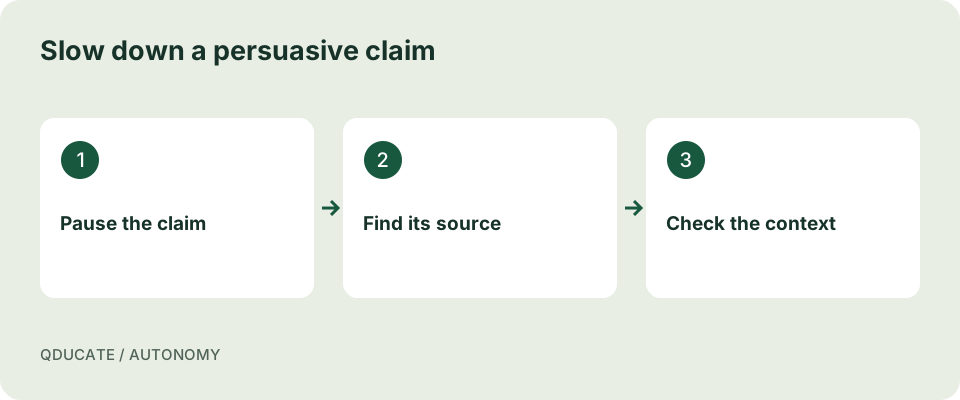
Choose one short clip for this exercise. You do not have to decide whether an entire channel or speaker is trustworthy before investigating one statement.
Pause at a claim you could check
Write the claim in a plain sentence and record the timestamp. Separate a factual assertion from a preference, prediction or fictional scene. “This is unfair” needs an explanation of the judgement. “Half the students left” needs a defined group, a period and a source.
Make a small evidence record:
| Item | What to save |
|---|---|
| Clip | Title, uploader, URL and the time you checked it |
| Claim | Exact timestamp and your plain-language interpretation |
| Source offered | Document, dataset, interview or recording actually cited |
| Missing context | What happened before and after the excerpt? |
| Finding | Supported, contradicted, or still unresolved—and why |
Follow the evidence out of the clip
Open the linked document rather than relying on a screenshot of it. Find the passage or table used. Does it describe the same population, event and period? A real source can be cited for a conclusion it does not establish.

For an interview excerpt, look for the longer recording and listen around the quoted section. For a graph, check the axes, units and date range. For a dramatic classroom scene, establish whether it is documentary footage, a reconstruction or fiction.
The eSafety Commissioner’s guide to fake news recommends examining a story’s source and credibility and checking beyond what has been shared. Use that as a starting point for an investigation, rather than treating a platform’s popularity as verification.
Try a second edit
As a media exercise, record a short, harmless explanation of how to make a sandwich or organise a desk. Produce two edits: one that includes the conditions and qualifications, and one that leaves them out. Show both to a willing viewer and compare what they understood. Explain the exercise afterwards and keep the recording private unless everyone involved agrees otherwise.
This does not prove a particular public clip is deceptive. It helps you notice what information an edit can remove.
Finish with a proportionate conclusion. “I could not find the supporting document” is more precise than “everything this person says is false”. Leave an unresolved claim unresolved.
Practise with the fictional film in When does 2 plus 2 become 22?, then use Before sharing a statistic, ask what was counted for numerical claims.