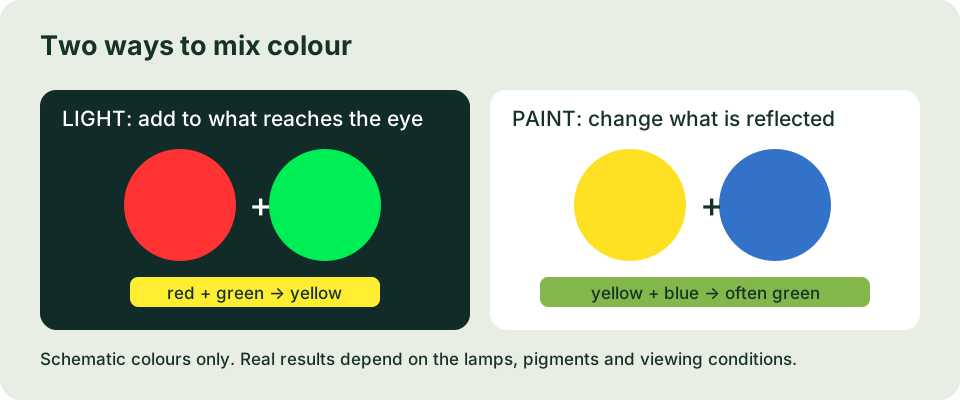
A screen can make yellow by lighting red and green pixels. A paintbox can make green by mixing suitable yellow and blue paints. There is no single mixing rule that works for every material. First ask what is being mixed: light reaching the eye, or substances that change which light reaches it.
Two different jobs
Coloured lights add light to a surface. In the familiar RGB model, red and green light can look yellow; red and blue can look magenta; green and blue can look cyan. A suitable balance of all three can look white. The Exploratorium’s coloured-shadow activity demonstrates these combinations with lamps.
Paint behaves differently. Pigments absorb some incoming light and scatter or reflect some of the rest. Mixing paints changes that balance. The Exploratorium’s pigment activity explores subtraction of light. Cyan, magenta and yellow are useful subtractive primaries, but real pigments are imperfect: the result depends on which paints, their amounts, the surface and the lighting. Mixing every paint in a box is unlikely to produce clean white.
Our experience of colour also depends on vision and the viewing conditions. A colour name alone is not a complete description of a physical sample.
Make a prediction sheet
Fold a page into three columns: materials, prediction and observation. Choose two washable paints. Record their names and approximate proportions before mixing a small amount on a white surface. Try a second mixture with more of one paint. Does the result match your prediction? Keep the samples beside your notes.
For a light comparison, use the Exploratorium demonstration linked above. Pause before each combination and predict the result. If you have suitable coloured LED lamps, an adult can help reproduce the activity on a white wall. Never look into bright lamps or use lasers for this exercise.
Keep the tests separate. A prediction about coloured light should not be marked wrong because a different experiment with paint gives another result.
Explain the model’s limits
Ask the learner to finish two sentences: “This model helps me predict…” and “I would need more information to predict…”. For example, an RGB diagram explains the main light combinations, but does not specify the exact colour of a particular pot of paint.
A useful next task is to design a colour-mixing instruction for someone who has never seen the experiment. Include the materials, proportions, viewing conditions and expected observation. That turns a colourful result into an explanation someone else can test.
For more pigment experiments, follow the related activities on the Exploratorium page. To practise checking an instruction’s meaning, read Sometimes the question needs checking too.