A curriculum purchase is a commitment of attention as well as money. An impressive contents page does not tell you whether a learner can use the explanations, whether you can provide the required support, or what happens when the work becomes difficult.
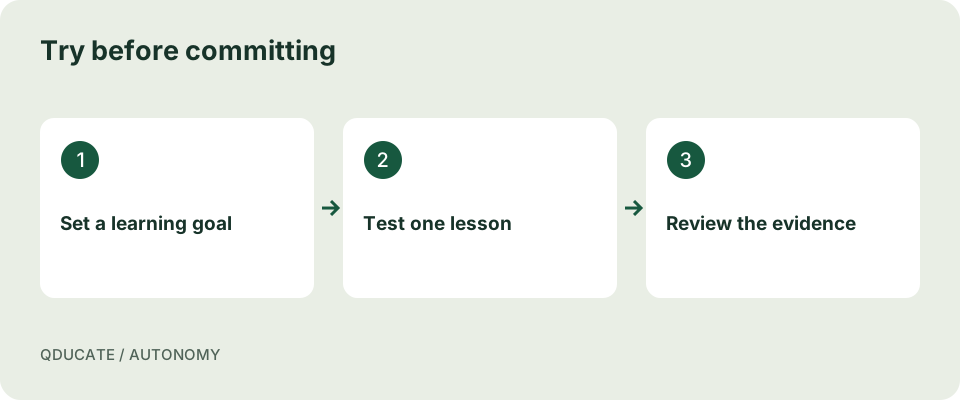
Start with a small, visible goal. “Improve maths” is too broad to guide a comparison. “Explain equivalent fractions and use them in a recipe” gives you something to look for in sample lessons and learner work.
Separate the plan from the package
The intended learning, the teaching resources and the delivery platform are different things. A subscription might provide all three, or only a library of videos. Find out what is actually included before comparing prices.

The Australian Curriculum website provides an official reference point for Australian school learning. Use it to examine the relevant learning area and year level. This comparison is an educational planning exercise; a commercial provider’s description does not establish that a package meets every requirement in your setting.
Try one ordinary lesson
Choose a lesson near the learner’s current level, rather than the easiest promotional example. Work through it together. Write down where the learner could begin independently, which explanations needed translating, and what materials were missing.
Then ask the learner to solve a fresh problem or explain an idea without replaying the demonstration. Completion alone is a weak reason to buy a whole year of work.
Use the same questions for each candidate:
| Question | Evidence to collect |
|---|---|
| What will the learner be able to do? | A specific goal and an example task |
| What happens after an error? | Feedback, a worked explanation and a second attempt |
| What must the adult provide? | Preparation, marking, equipment and scheduled help |
| Can we keep our work? | A sample export or a usable learning record |
| What does it cost to stop? | Current cancellation, renewal and access terms |
Make a reversible decision
Where possible, begin with a short trial and set a review point. Agree on what would justify continuing: perhaps the learner can explain the new idea, practise without constant prompting and recognise when help is needed. Record what would justify changing course too.
A package may work well for one subject and poorly for another. You do not have to turn a useful resource into an all-or-nothing identity. Keep the learning goal stable while adjusting the tools.
Use The lesson is finished. What can the learner do? to plan the review, and Choose learning tools by the work they help you do to compare platforms and records.