Giving a child responsibility works better as a clear handover than as a sudden announcement that they are on their own. Choose something worthwhile, make the boundaries visible, and leave a route back to help.
The following planning exercise can be adapted to a learner’s abilities and circumstances. It is a way to organise a conversation, not a timetable every child must follow.
Choose one manageable task
Start with a low-stakes task such as preparing materials for a project, keeping track of a library book, or planning part of a family meal. Ask the child which part they would like to own and what might make it difficult.
Define what “done” means. “Be organised” is hard to act on. “Put the project materials and your written plan in the box before tomorrow’s session” makes the task visible. Check that the child has the time, equipment and understanding needed.
Agree on help before it is needed
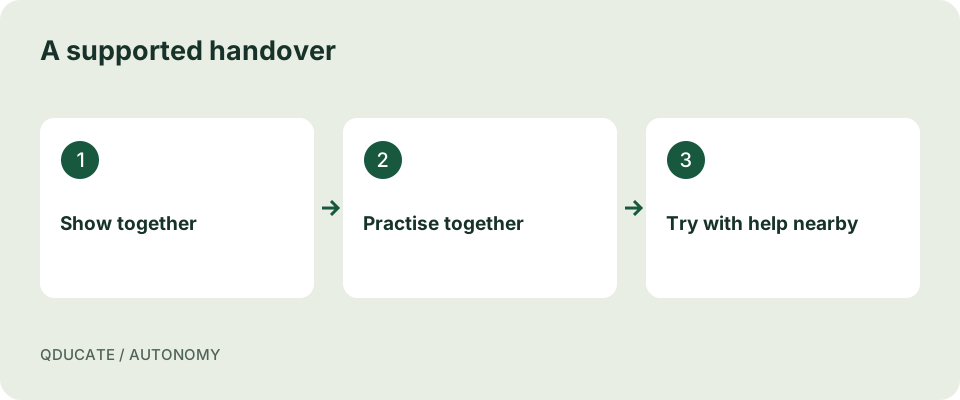
Try a sequence of demonstration, shared practice and an independent attempt. Move between these stages when useful; there is no prize for removing assistance early.

Write a short agreement together:
- My task: what I will do and when.
- Available help: who I can ask, and how.
- Boundaries: which decisions still need an adult.
- Review: when we will see how the arrangement worked.
Support might include a picture checklist, a reminder, accessible equipment or extra time. Independence can include choosing and using those supports. Do not mistake needing an accommodation for refusing responsibility.
Review the task, not the child’s character
If the materials are missing, first establish what happened. Was the instruction unclear? Was the box unavailable? Did the child forget the review time? Solve the practical problem before turning it into a judgement about being lazy or unreliable.
A useful review asks: “What could you do yourself? Where did you get stuck? What shall we change next time?” Keep the adult responsible for safety and for making the arrangement fair. Essential care should never become a reward for completing a task.
Raising Children Network’s guide to independence in the teenage years discusses gradually increasing responsibility alongside support, boundaries and individual readiness. Its age context matters; adapt the task rather than applying teenage expectations to a younger child.
For a practical follow-up, make a small project and agree which decisions belong to the learner. Keep a short record of the help that was useful so the next handover starts with what you learned.